05 November 2026
On 1–2 November 2026, the third training module for school leadership teams was held in Novi Pazar as part of the ARISE project, “Empowering Schools in Breaking Barriers and Building Equitable Learning Environments”, implemented with the support of the UniCredit Foundation.
The training brought together teams from five schools participating in the second wave of the project: Rada Miljković Primary School from Jagodina, Braća Vilotijević Primary School from Kraljevo, Đura Jakšić Primary School from Trnava (Novi Pazar), the Hospitality and Tourism School from Novi Pazar, and the Technical School from Ćuprija.
The module focused on individualised support for students at risk. This part of the training was based on a key finding from the ARISE project's baseline research, conducted in four countries across the region: students at risk remain invisible when schools rely solely on average indicators, and meaningful improvements in their well-being can only begin when schools recognise differences among students and respond to their individual needs.
On the first day, participants explored the concept of "students at risk" and the individual, family-related, school-related and broader societal factors that increase the likelihood of negative educational outcomes. They also reviewed the support measures already available within the education system, ranging from Individual Education Plans (IEPs) and pedagogical assistants to remedial classes and cooperation with families.
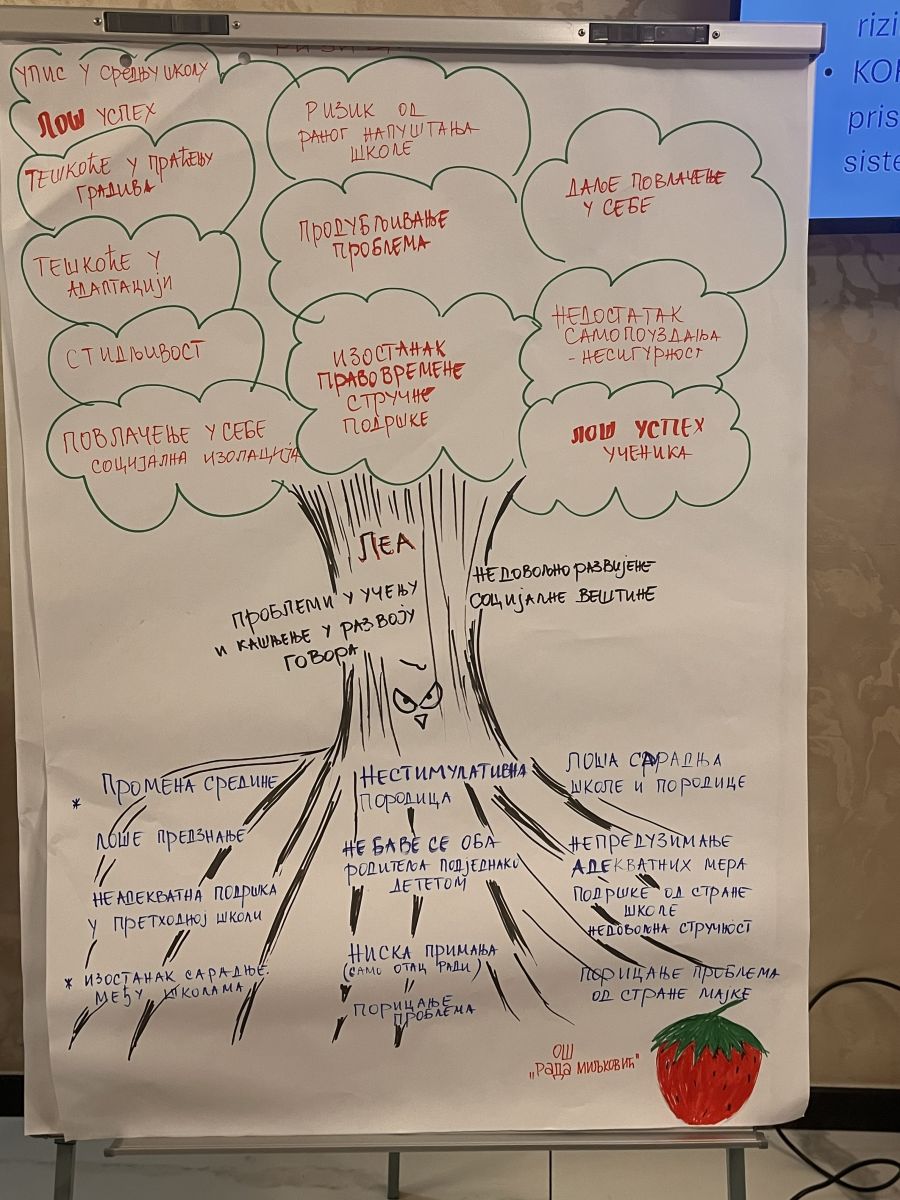
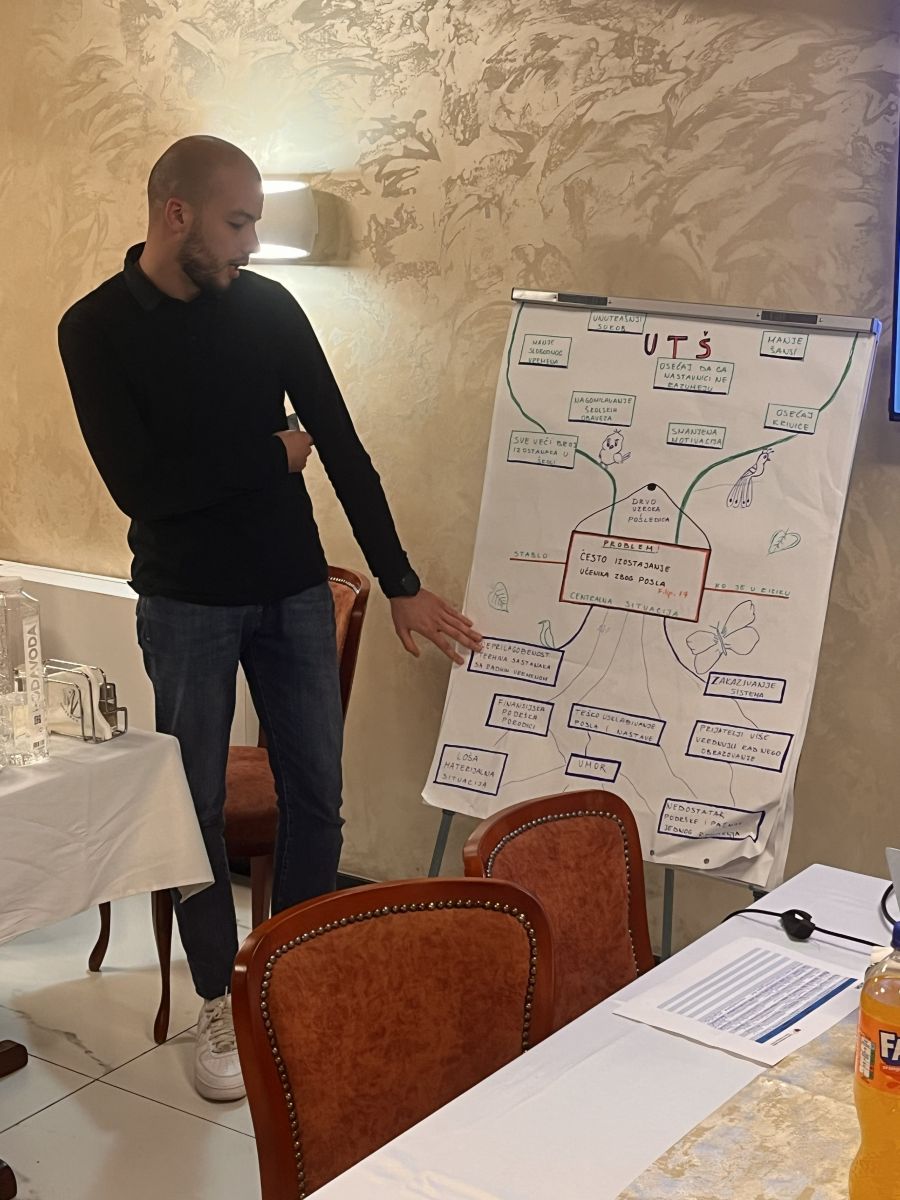
Through case studies and the Problem Tree Analysis tool, school teams examined specific situations and subsequently refined their action plans for improving the school climate through peer exchange with colleagues from other schools.
The second day focused on student dropout. Participants examined school-related and contextual factors contributing to early school leaving, with particular attention to transition periods, teaching practices that do not adequately respond to students' needs, and families' socio-economic circumstances, as well as the different levels at which these factors operate.
The Dropout Prevention Model was introduced, highlighting its three components: an early identification and response system, whole-school activities, and teacher support. School teams then engaged in practical work using the Instrument for Identifying Students at Risk of Dropping Out.
At the end of the module, school teams were assigned their third task: to apply the instrument in their respective schools and, based on the findings, develop support plans for priority students, focusing on changing school practices that contribute to the risk of dropping out.
The teams will present the results of this work during the next stage of the programme.
About UniCredit Foundation:
UniCredit Foundation is the corporate foundation of UniCredit Group whose purpose is to unlock the potential of Europe’s next generation. Its mission is to empower young people across Europe by creating equal opportunities in education and to support them in making their way in life and the professional world. The Foundation's initiatives aim at combating school drop-out, enhancing employability, encouraging university attainment and promoting study and research. The Foundation is committed to supporting communities in all countries where UniCredit Group operates.