21 September 2026
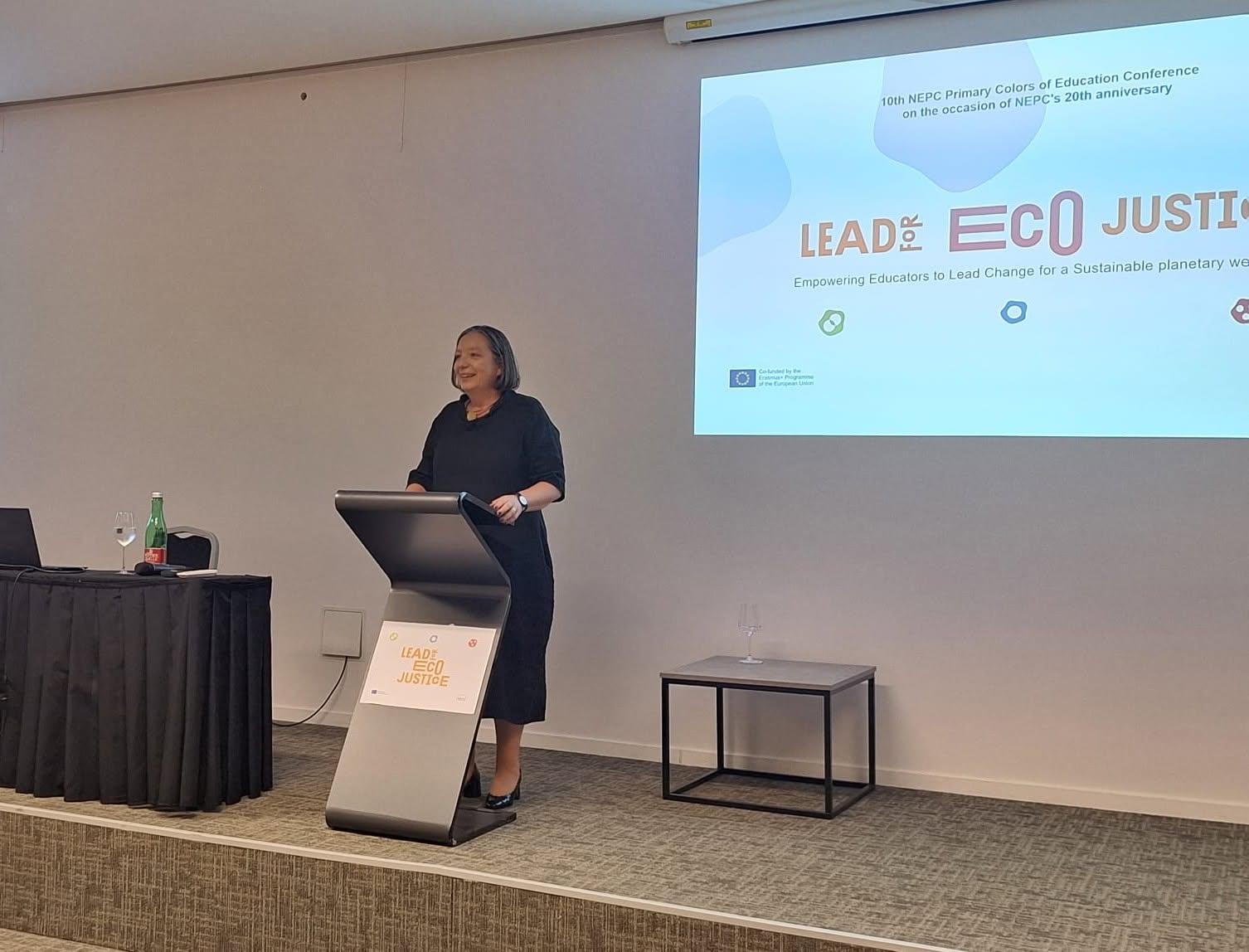
From 16 to 18 September 2026, the 10th Conference of the Network of Education Policy Centers (NEPC), “Primary Colours of Education”, was held in Sveti Martin na Muri (Međimurje, Croatia). The conference focused on the theme Empowering Teachers and Educators to Lead Change for Sustainable Well-being. It also served as the final event of the “Lead for EcoJustice” project, co-funded by the European Union’s Erasmus+ Programme, and marked two decades of NEPC’s work.
Serbia was represented by a large delegation. In addition to the Centre for Education Policy (CEP) and the “Kralj Petar Prvi” Primary School from Belgrade, members of the project consortium, the conference was attended by representatives of partner schools: “Milan Blagojević” Primary School from Lučani, “Heroj Ivan Muker” Primary School from Smederevska Palanka, and “Stojan Živković Stole” Primary School from Trnjane. Representatives of the Institute for Educational Research, the Faculty of Philosophy at the University of Belgrade, and the Centre for Interactive Pedagogy (CIP) also participated.
Researchers Milica Marušić Jablanović and Jelena Stanišić from the Institute for Educational Research presented a paper exploring the relationship between students’ environmental identity and the principles of ecojustice. Professor Jelena Vranješević from the Faculty of Philosophy participated in a panel discussion on youth activism, while Nenad Matić, Principal of “Kralj Petar Prvi” Primary School, shared his experiences in a Living Library session, discussing how ecojustice is transforming school culture. Miroslav Markićević, a researcher at CEP, moderated a Living Library session in which school representatives from Slovenia, Hungary, and Croatia shared stories of change within their school communities.
Through keynote presentations by Mike Bottery (University of Hull), Arjen Wals (Wageningen University), and Jelena Puđak (Ivo Pilar Institute of Social Sciences), as well as panel discussions, workshops, school visits, and Living Library sessions, several key lessons emerged:
- There can be no well-being for all without planetary well-being. Ecojustice is not simply another topic to be added to education, but a lens through which we examine education itself: whose knowledge is taught, which communities are prepared for change, and who bears the consequences of these changes.
- School leaders need a planetary perspective to understand global threats and foster a school ethos in which students develop relevant knowledge, attitudes, and values.
- A whole-school approach requires systemic change, encompassing school governance, teaching and learning, the school environment, and relationships with the wider community, while strengthening students’ agency and action competence.
- Knowledge and technology alone are not enough. Education should develop a critical understanding of the interdependence between society and nature and encourage students to imagine alternative social futures within planetary boundaries.
- Change begins with small steps and personal transformation. Schools’ experiences demonstrate that new practices become embedded when they are embraced as a shared responsibility of the entire school community, rather than imposed through decisions made by school leadership.
- Young people are strongly committed to environmental issues, but often lack genuine opportunities to influence decision-making. Schools should therefore become spaces for meaningful student participation.
The conference reaffirmed that schools participating in the “Lead for EcoJustice” programme have initiated changes that go beyond individual activities, transforming the ways in which schools think, make decisions, and take action. CEP will continue to build on these experiences and strengthen cooperation with partners through similar initiatives.